
Field Testing

RF & Wireless Testing

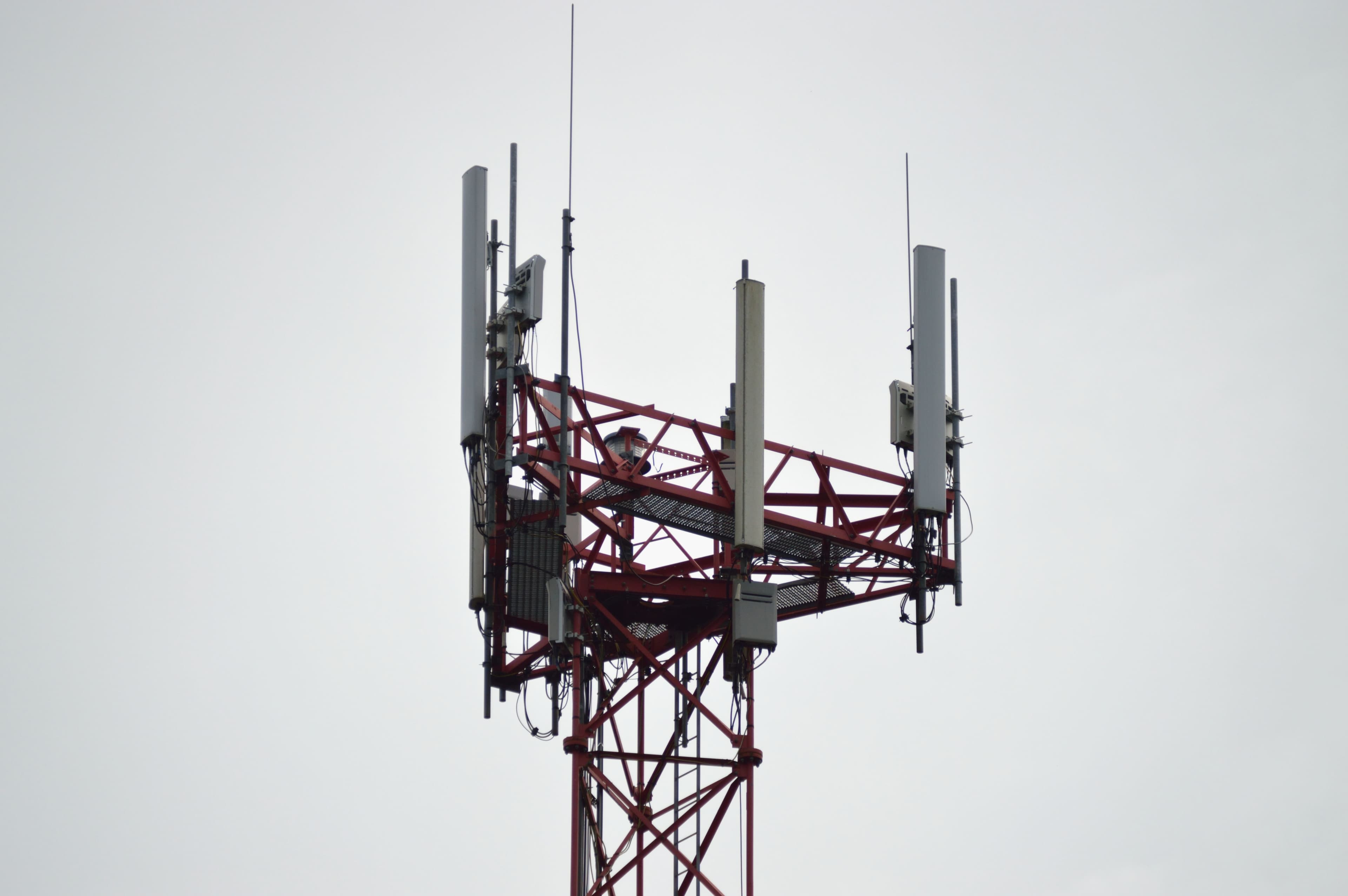
Field-grade drive, walk and stationary testing, and the same discipline applied to instrumented vehicles collecting road data.

RF & Wireless TestingField capture

The work

I measure what carriers and OEMs actually ship: coverage, capacity, and quality across real markets, then turn the field data into decisions.

Networks look fine on a planning tool and fall apart on the road. I run field testing that captures the truth: RSRP, SINR, throughput, latency, voice quality, and handovers, collected the way your users experience them. Drive, walk, or stationary, across a single cluster or a whole region, benchmarked against every competing carrier when it matters. You get clean, decision-ready data and a clear read on where the network wins and where it hurts.

What I do

Seven ways a network gets measured.

Most campaigns use more than one. Which ones depends on what you are trying to find out, and that is the first conversation.

Drive testing

Coverage, quality and mobility measured along the roads people actually drive.

Scanner and test handsets logging continuously against position across a route, a cluster or a whole market. SSB-RSRP and RSRQ for coverage, SINR for quality, downlink and uplink throughput, latency, VoLTE MOS and call setup, plus handover success in and out of every cell on the route. Layer 3 decoded alongside it, because a failure usually shows as a rejected message before it shows as a bad number: handover failures, NAS rejects, bearer modifications. NSA and SA both, FR1 and FR2 where it is deployed.\n\nA planning tool predicts coverage from terrain and antenna patterns. A drive test records what the network did, including what the model never saw: a building that went up, a tilt left at its commissioning value, a neighbour nobody defined.

When you need it
Validating a rollout, investigating a cluster of complaints, proving an optimisation held, or taking a baseline before anything changes.
What you get
Position-tagged datasets, per-metric heatmaps across the route, distribution statistics rather than averages alone, and a written read on where the network holds and where it does not.

Walk and in-building testing

On foot, floor by floor, where most of the traffic actually is.

Most subscriber minutes are spent inside a building and a vehicle reaches none of them. Walk testing covers venues, campuses, transit stations, hospitals and offices floor by floor, verifying distributed antenna systems and small cells against the design rather than against a hope. Grid testing where a pass or fail has to be produced per area, which is how public safety coverage is signed off.\n\nIndoor propagation is its own problem. A signal that is strong in the car park can be unusable two walls in, and the only way to know which walls is to walk them.

When you need it
Commissioning a DAS or small cell system, closing out a public safety requirement, answering complaints from a single building, or proving in-building performance before a venue opens.
What you get
Measurements per floor against the design criteria, the areas that fail and by what margin, and a pass or fail record in the form the authority or the client needs.

Stationary and long dwell

Hours in one place, because some faults only appear under load.

A drive test crosses a cell in seconds and sees it uncongested. Long dwell testing holds position for hours and watches what happens as traffic arrives: throughput decaying through the evening peak, MCS dropping and BLER climbing under contention, sessions failing on a cell whose counters look healthy all day.\n\nCapacity problems are invisible to a moving test by definition. If a site passes every drive and still generates tickets, this is usually the test that finds out why.

When you need it
Before a launch, after a complaint cluster that drive testing cannot reproduce, or to characterise a site that looks well on every KPI and still produces trouble.
What you get
A time series per metric across the dwell, the hours where performance turns, and whether the cause is coverage, capacity or configuration.

Competitive benchmarking

Every carrier, same route, same hour, matched devices.

A comparison is only worth having when the network is the only variable. Benchmarking runs matched handsets on each carrier simultaneously over one route, so the results can be set against each other without an argument about conditions, time of day or device class.\n\nAnything less compares a drive on a wet Tuesday against a drive on a clear Sunday and calls it a finding. Reported as distributions rather than averages, because the tenth percentile is where a customer decides your network is bad.

When you need it
Making or defending a coverage claim, choosing a carrier to standardise a fleet or a workforce on, or finding where a competitor is genuinely ahead and by how much.
What you get
Carrier-by-carrier comparison across every metric, the segments and hours where each leads, and the margin stated precisely enough to publish.

Autonomous vehicle data collection

Instrumented miles driven to a plan, logged clean, and written up the same day.

An engineering vehicle on a defined route for six to eight hours, camera, audio and sensor capture started and stopped by hand, and a check that the session is usable before the shift ends. The equipment differs from a scanner and a set of test handsets. The day does not: a route planned before anyone turns a key, equipment that has to be working before the vehicle moves, and a written record of what happened while it did.

I drive a car running these systems every day, so I know how they behave in traffic, where they hesitate, and which of those moments is worth a note. What I bring professionally is the testing half: routes treated as a test plan, honest logs, and observations an engineer can act on rather than a description of the weather.

When you need it
When an autonomy, ADAS or robotaxi programme needs road data gathered consistently, day after day, by somebody who treats a shift as a measurement rather than a drive.
What you get
Session files that survive review, a daily drive report covering route, conditions, interventions and equipment faults, and early warning on anything that would waste an engineer a week later.

Site verification and cluster acceptance

Proving a site does what the design said, before traffic arrives.

Single site verification on a new or modified site: does the cell carry traffic, do the sectors face where the drawing says, do handovers work clockwise and anticlockwise around the site and in and out of its neighbours. Then cluster testing across the group, because a site that passes alone can still break the one next to it.\n\nThis is where the gap between the design and the build shows up: workmanship, provisioning, parameters left at default, a sector cross-fed at the top of the tower. All of it cheaper to find now than after the site is carrying customers.

When you need it
Bringing new sites on air, closing out a construction programme, accepting a cluster from a vendor, or re-verifying after a modification.
What you get
Pass or fail against the acceptance criteria per site, every deviation found with evidence, and what has to change before sign off.

Post processing and reporting

Logs are not an answer. This is the part that turns them into one.

A campaign produces gigabytes that almost nobody opens. I write the processing myself rather than handing over a raw export and a spreadsheet: cleaning, binning, joining runs across days, devices and engineers, and building the maps and dashboards that make a finding obvious to an RF manager and to whoever above them has to approve the spend.\n\nDeliverables in the formats the next person actually uses, GIS layers included, rather than a PDF that cannot be queried. Custom tooling per campaign where the standard exports cannot answer the question being asked.

When you need it
Any campaign where the point is a decision rather than a dataset, or where a previous vendor delivered logs that nobody has opened since.
What you get
Clean, decision-ready data, heatmaps and distribution statistics, GIS layers, the raw logs kept as evidence, and a written finding that says what to do next.

Who it is for

The teams that call me in.

Questions

What people ask before we start.

What networks and technologies do you test?
5G NR (NSA and SA), LTE, and legacy 3G where it still matters, across low, mid, and mmWave bands. Multi-carrier benchmarking is available for T-Mobile, Verizon, AT&T, and Dish.
What kinds of testing do you run?
Drive testing for coverage and mobility, walk testing for indoor and venue performance, and stationary long-dwell testing for capacity and stability. Scanner-based collection is available when a network-agnostic view is needed.
Which markets and regions do you cover?
I test across US regions including the Northeast, Southeast, Central, Mountain, Southwest, and West, from single-cluster drives to full-market and regional campaigns. Travel-based deployments are standard.
What do I actually get back?
Clean logfiles plus post-processed KPIs: coverage plots, throughput and latency, accessibility, retainability, mobility, and voice quality, with a written read on the findings and the fixes that matter.
Can you help fix what the data finds?
Yes. Beyond collection I do post-processing and optimization input: parameter and neighbor recommendations, coverage and interference analysis, and re-test to confirm the gains.

Scope and pricing

Scoped per campaign by market size, drive and walk hours, technologies, and carriers under test. Single-cluster drives, full-market sweeps, and multi-region programs are all available. Send your footprint and I will size it.

Send me your footprint