Writing
Sep 11, 2026 · 9 min read
Twenty-three states from the driver's seat
Supervising wireless field testing across twenty-three states. What the work looks like from the driver's seat, which cities are hardest to get a clean reading in, what goes wrong in the field, and the part of the job that costs something.
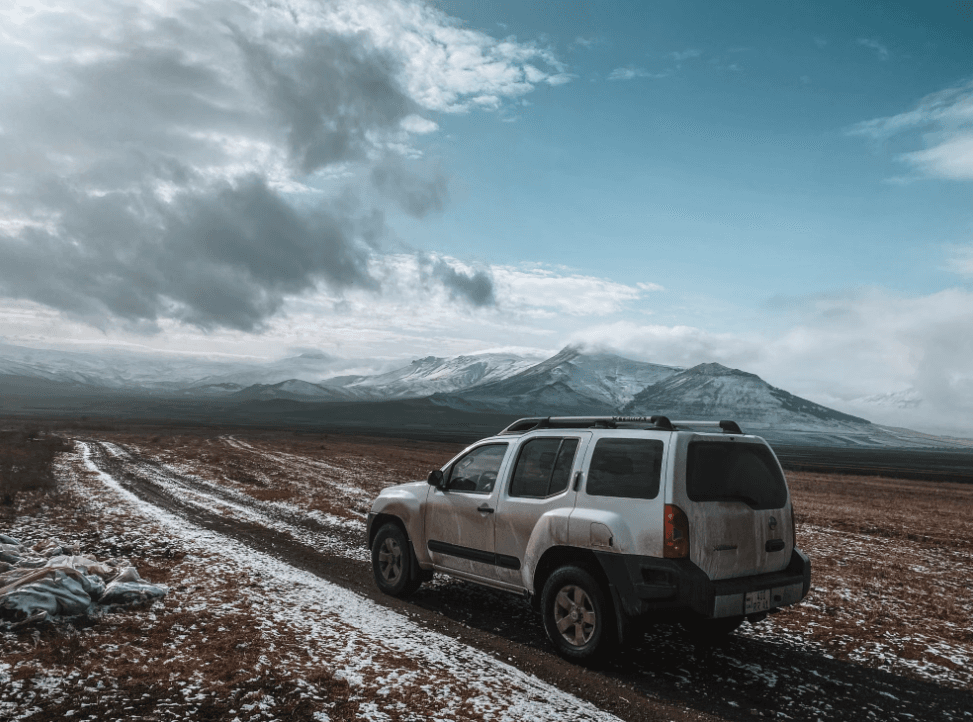
My job title is RF engineer. I supervise field testers across the United States. That sounds contained on paper, and in practice it means I live out of a suitcase, a test vehicle with antennas on the roof, and whichever hotel is closest to the market we are testing.
We work about a 250 mile radius from wherever we set up. Test the network, find where the coverage falls over, hand back something the carrier can act on. Then load the equipment and do it somewhere else.
Twenty-three states so far. This is what that actually looks like, including the parts that go wrong.
California, where I learned the rhythm
Los Angeles first. LA never feels like one city. It feels like a dozen cities stitched together by freeways. We were stationed near Inglewood running the corridors between LAX and downtown. You can be eating breakfast in East LA and taking a reading in the Hollywood Hills by lunch, and both of those are the same working day.
The freeways are where LA tests a network hardest. At highway speed a handset hands over from cell to cell every few seconds, and the cells overlap so heavily that it often has three or four strong servers to choose between. That is where you see handover failures, ping-ponging between neighbors, and quality dropping even when signal strength looks fine. Strong signal and good service are not the same thing, and LA is where that stops being a slide in a training deck.
San Francisco was harder. The hills will test your patience with a vehicle full of equipment, and we worked the Financial District, the Mission, out toward the Presidio. Downtown is also where GPS stops telling the truth. Between the towers the position drifts and jumps, so a measurement lands on the wrong street, and a map built from it is confidently wrong. You learn to watch the track as you drive and mark the stretches that need a second pass. One evening after a long shift I drove to Baker Beach and sat there while the fog came in under the bridge. No readings, no laptop. That was the first time the job felt like something other than work.
San Bernardino taught me more about propagation than any course has. You go from suburban sprawl to dense pine forest inside twenty minutes, and the elevation does things to a signal that a textbook describes but does not prepare you for. A site on a ridge can throw coverage far past where it was designed to reach, then the trees take it away again a mile later. Overshooting cells and foliage loss in the same afternoon. Agoura Hills was the same lesson on tighter roads.
By the time we pushed east I had the pattern. Load the equipment, read the city, do the work, check the logs, sleep, repeat.
Nevada after dark
Everybody thinks Vegas. We were there, but the Nevada I remember is the one past the strip. The mountains east of Reno. The high desert running out toward Elko. Emptiness that makes you feel small in a way that is not unpleasant.
Out there the problem is distance. Sites are far apart, the handset sits at the edge of a cell for miles at a time, and you watch it fall back from 5G to LTE, and sometimes further, before the next site picks it up. Those gaps are exactly what the drive is for. The desert also has an opinion about the equipment. Laptops, scanners and handsets in a hot vehicle throttle and drop out, and a phone that overheats mid-route leaves a hole in the log that has to be driven again.
Driving it at night is the part I would tell someone about. The road disappears, the stars come out properly, and you have two hundred miles of nothing to think in. During the day that emptiness can feel like isolation. After dark it stops feeling like anything at all, which is its own kind of rest.
Washington and Oregon, through the trees
The Pacific Northwest tests a network through its forests. Wet foliage soaks up signal, and the tall evergreens lining the roads take a real bite out of coverage that looks fine on a planning map. Add hills and open water and the signal behaves differently across a bay than it does across a block.
The rain is mostly a problem for the crew rather than the radio, but a wet week does tell you quickly which equipment mounts were done properly.
Montana and Kansas, where distance is the problem
Montana is the emptiest work I have done. Sites sit a long way apart, the handset spends miles at the edge of a cell, and you watch it step down from 5G to LTE and hang on until the next site picks it up. The mountains make it sharper. Put a ridge between you and the site and the signal is simply gone, then back again around the next bend.
Kansas is the opposite problem. Flat ground means clean propagation and sites that reach a long way, which sounds easy until a cell carries farther than it was planned to and starts interfering with its neighbors. A drive there is as much about finding where coverage reaches too far as where it stops.
Colorado, Utah and Idaho, up in the mountains
The Mountain West is elevation and canyons. A site up high throws coverage across a whole valley, and a canyon wall a few miles on cuts it off completely. You learn to read a drive there as much by the terrain out the window as by the numbers on the laptop, and to expect the signal to change every time the road climbs or drops.
The Dakotas, where I stopped being surprised
South Dakota caught me off guard. I was not expecting much and then the Badlands drop away in front of you into canyons and spires that look like the wrong planet. We tested near Rapid City. I drove out to Mount Rushmore on a day off and the thing nobody mentions is how quiet it is standing there.
North Dakota is grassland and wind. Mostly wind. We worked around Bismarck and Fargo, and I got out to Theodore Roosevelt National Park to see the wild horses. Flat terrain makes for clean propagation, so the work was some of the easiest of the year and the scenery was some of the best.
Minnesota, and the people who brought coffee
Minneapolis is a proper city. Good food, good coffee, and the lakes that locals run around whatever the weather is doing. We spent a solid stretch on the Twin Cities metro. Saint Paul has an older feel to it, the cathedral up on the hill, quieter streets.
Cold is its own test. Batteries drain faster, equipment fogs up coming in from the vehicle, and a handset that was fine at noon starts dropping off the logger at dusk. You plan the day around it.
Minnesotans are friendly in a way I did not expect and could not fake. People saw the equipment, asked what we were doing, and came back with coffee. One man spent ten minutes telling me where to eat lunch and was completely correct. When you are a long way from home and living in a hotel, that lands harder than it should.
Chicago, the hardest place to get a clean reading
Dense cities are the worst environment for this work, and Chicago is dense. Signals bounce between the towers, so a handset hears the same cell several ways at once and a dozen others besides. That shows up as low signal quality next to perfectly healthy signal strength, interference that moves as you move, and handovers that fire too early or too late. Under the elevated tracks the picture changes again. Mapping it properly takes slow driving, repeat passes, and real care in the processing afterwards. We were there for weeks, in the city and out into the suburbs, and my team put in long days for it.
The city paid us back. I walked the Magnificent Mile on a day off, ate deep dish at Lou Malnati's, which is the correct choice, and stood at the edge of Lake Michigan feeling like I was looking at an ocean. Late jazz in the South Loop. The L rattling overhead while you are trying to hold a reading steady.
Six states that run together in the telling
Ohio, Michigan, Nebraska, Iowa, Wisconsin, Pennsylvania. Not because they blur, but because the pace was the same in all of them.
Columbus and Cleveland in Ohio. I went to the Rock and Roll Hall of Fame expecting an hour and left after two. Detroit had the feel of a city rebuilding on top of its own wounds rather than pretending they were not there. The best Middle Eastern food I have eaten anywhere was in Dearborn, at a small place where the owner came out to ask if the meal had been good like the answer mattered to him.
Nebraska is corn, sky, and the most serious thunderstorms I have watched from a hotel parking lot. Lightning splitting the horizon in three directions at once. Iowa was quieter and Des Moines had more going on downtown than I expected. Wisconsin gave me Milwaukee's lakefront and cheese curds that have ruined every other cheese curd for me. Pennsylvania was Philadelphia, the Liberty Bell, a cheesesteak from Pat's, and the green hills of Amish country on the drive out.
Virginia and West Virginia, valley by valley
West Virginia is hills folded into hills, and the roads follow the valleys. A site on one ridge can light up the valley in front of it and leave the next one dark, so the drive becomes a list of hollows: in coverage, out, in again. Terrain shadowing like that is easy to miss on a map and impossible to miss in a log.
Virginia gave us more of everything: denser suburbs, busier highways, and the same ridges further west. Inside one state you go from the problems of a city to the problems of the mountains.
Texas, at scale
Texas changes how you plan. The runs between cities are long, the summer heat is relentless on the equipment, and a single market can be bigger than some states. You stage the work in blocks, cool the vehicle before the handsets go in, and accept that a route planned for one day might take two.
What actually goes wrong
The scenery is the part people ask about. The work is mostly problems, and the same ones turn up in every market.
- Logs that are not there. A test handset freezes, a logging session crashes, or a file comes back corrupted. If nobody notices before the team leaves, that stretch of road has to be driven again. Checking the logs before we pack up is the habit that saves the most time.
- Position you cannot trust. GPS drift in dense downtowns and under bridges puts measurements in the wrong place. A bad track makes a good measurement useless, so the route gets watched as closely as the radio.
- Calls that drop at the handover. Voice over LTE is unforgiving. A call that drops as the phone moves between cells usually points to a missing or misconfigured neighbor, and finding that is one of the most useful things a drive does.
- 5G that is not quite 5G. A handset can show 5G and still be leaning on LTE underneath, or fall back to it at the edge of a cell. Where and why that happens is exactly what the carrier wants to know.
- Equipment that disagrees with itself. Two handsets on different firmware, or set to different bands, will not measure the same network the same way. Matching the devices before the drive is dull, and it is the difference between a comparison and a guess.
- Heat, cold and power. Overheating in the desert, batteries draining in the cold, an inverter that gives out halfway through a route. The equipment has to survive the day before the data can.
None of that makes for a good photograph, and all of it decides whether the report at the end is worth reading.
Hotels, flights, and the points that pile up
The logistics are half the job and nobody writes about them.
Hotels stop being hotels and start being where you live. I have stayed in more Marriotts, Hiltons and Holiday Inns than I can count. You learn which chains have the better pillows and which have breakfast worth getting up for. The points stack fast enough that there was a stretch where I did not pay for a night at all.
The test vehicle is the office. It needs room for scanners, laptops, a rack of handsets and the power to run them all day, and it needs to start every morning without a conversation. You get attached to a good one.
Then the flights. Enough miles between deployments that I rarely pay full price, and PreCheck stopped being a convenience somewhere around the second year. You learn which airports feed you properly past security and which ones will eat your connection.
The part that costs something
For all of that, there is a bill, and it does not arrive as a rewards statement.
Being away is hard in a quiet way rather than a dramatic one. It is missing a school play because you are in Fargo. It is a video call from a parking lot in Cleveland because that was the only window the schedules gave you. It is being home for a holiday and still half on the road in your head, and some years not being home for it at all.
You miss birthdays and anniversaries, and worse than those, the ordinary Tuesday evenings that are actually what a family is made of. No amount of points covers that. The guilt is quiet and it travels with you.
What I can control is the time I do get. Phone down, email closed, no just checking one thing. When I am home I am home. I am still working at it, and I am better at it than I was, and the people who put up with this deserve more than whatever the road leaves over.
Why I have not stopped
People ask why I do not find something stationary. A desk. Something local. It is a fair question.
The honest answer is that the work suits me. I can run the team from a hotel when I need to, but I would rather be in the field solving the problem than reading about it afterwards. I like seeing the country at ground level. I like the crew I do it with, the way we arrive somewhere new, work it out, finish, and move on. There is a competence to that which feels earned rather than claimed.
So if you pass a vehicle on a highway shoulder with antennas on the roof and someone in a safety vest squinting at a laptop, that might be me. Wave. I will wave back, and then I will get back to it, because the next market is already on the schedule.
Get the next one
A note when something new goes up.
That is all it is. No weekly letter, no list I sell, and one click to leave whenever you have had enough.